01 / The question
What does a discriminative model know beyond its labels?
A model trained to recognize images can also retain structure that helps create them.
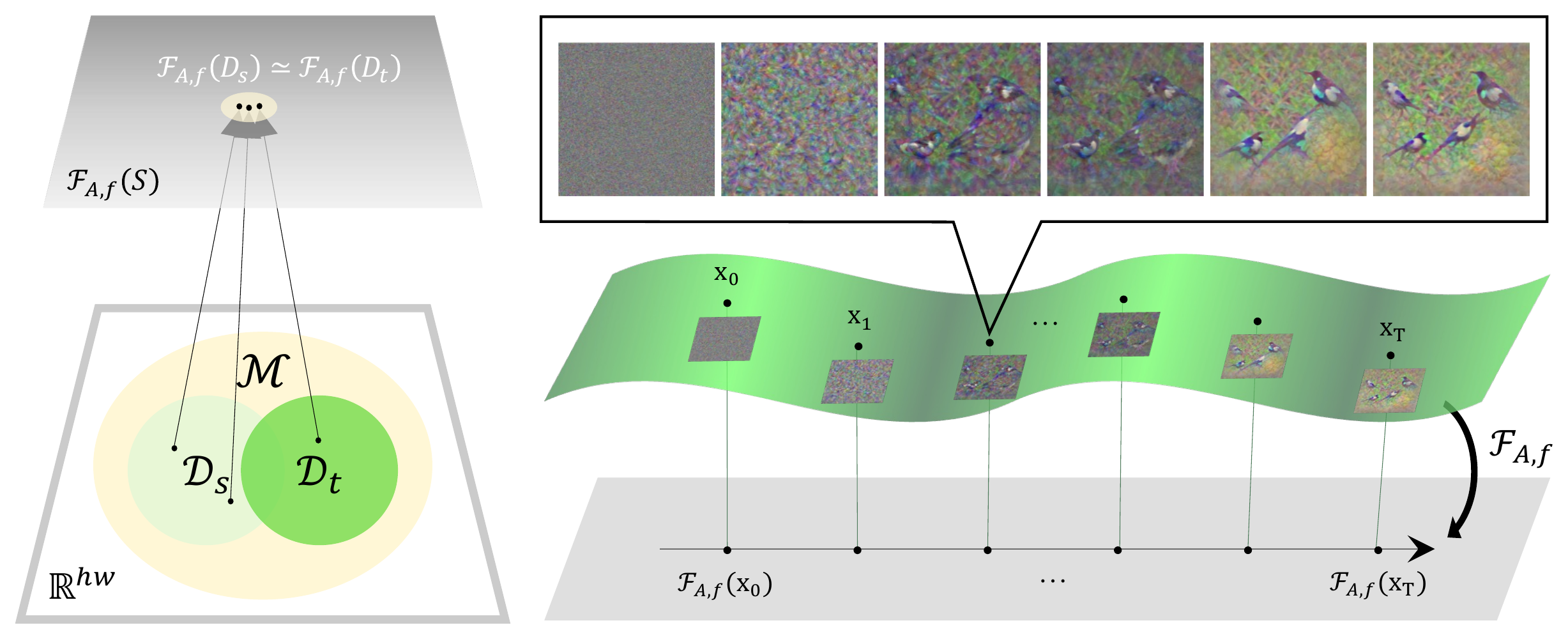
DSF asks whether that structure can be exposed as a generative signal. It uses a pretrained model as a functional prior, without retraining the model or requiring a task-specific target for unconditional generation.
Start with a discriminative model
Classifiers, detectors, and self-supervised encoders provide different learned functions.
Extract an image-space field
DSF uses the geometry of loss gradients to determine an update direction.
Update the image
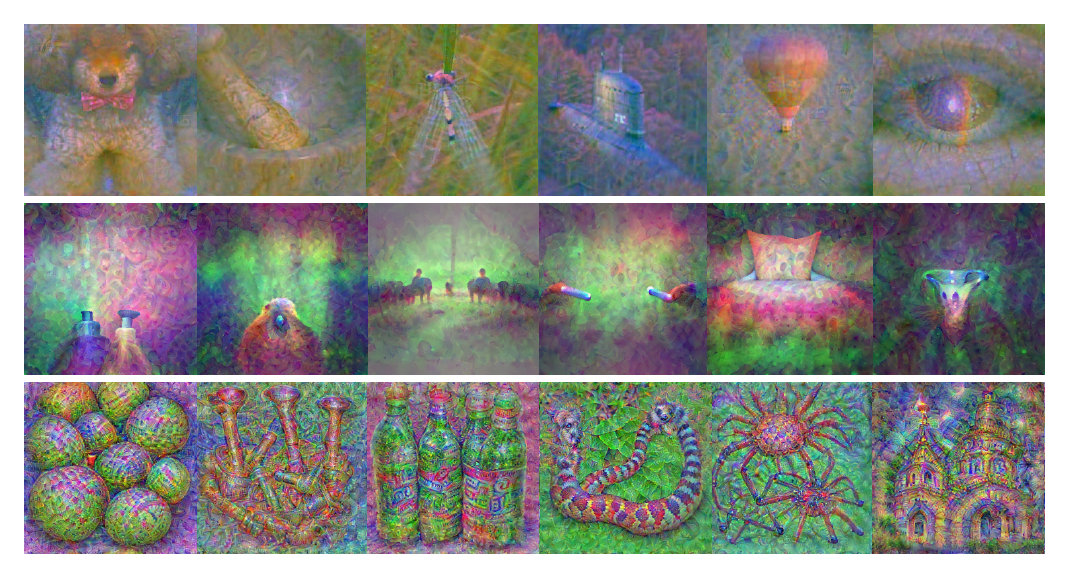
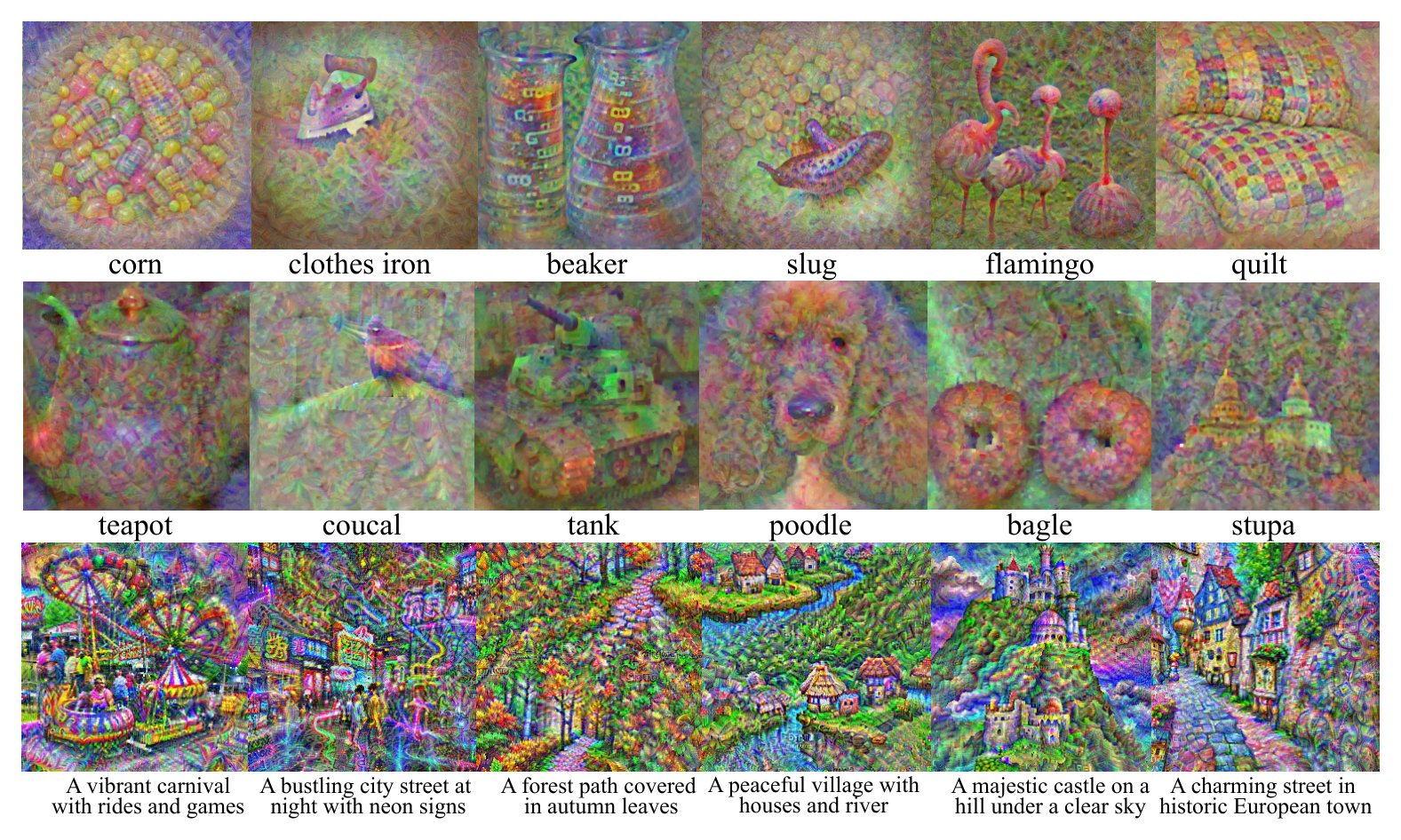
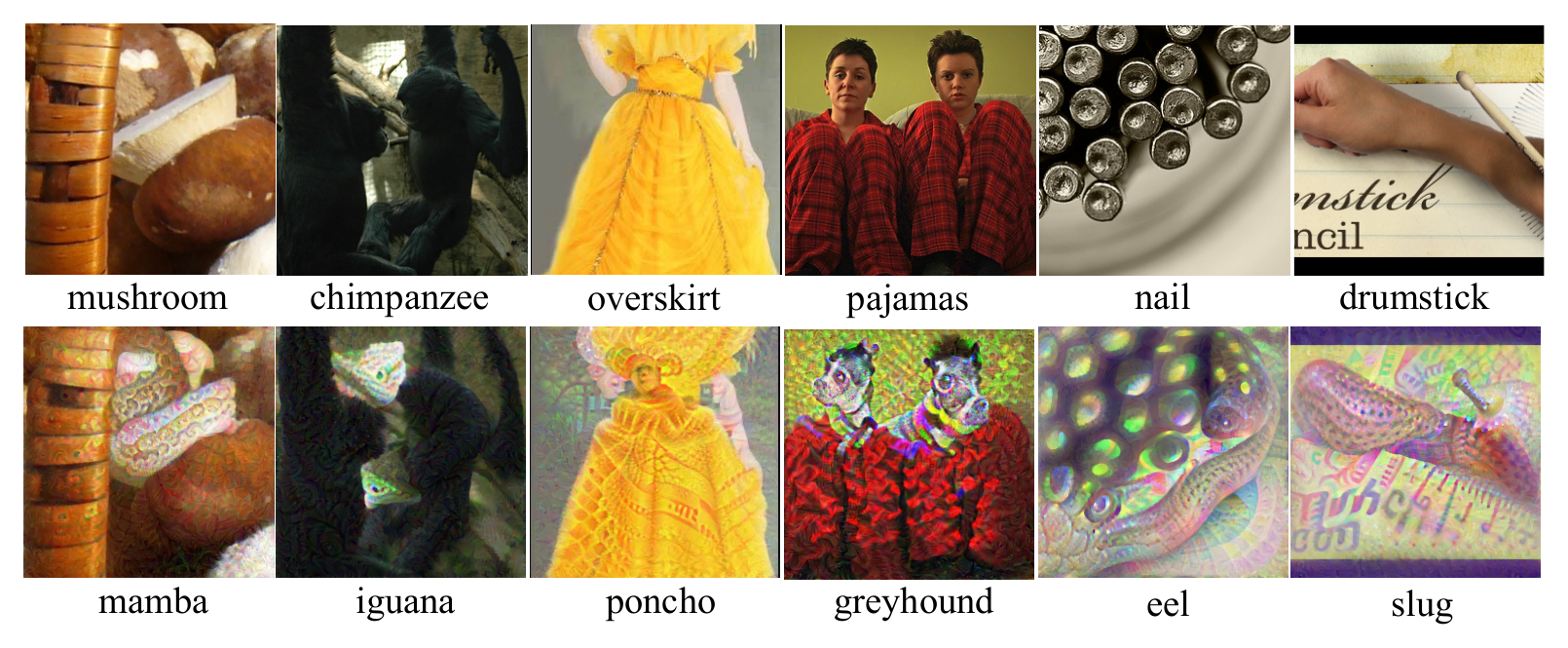
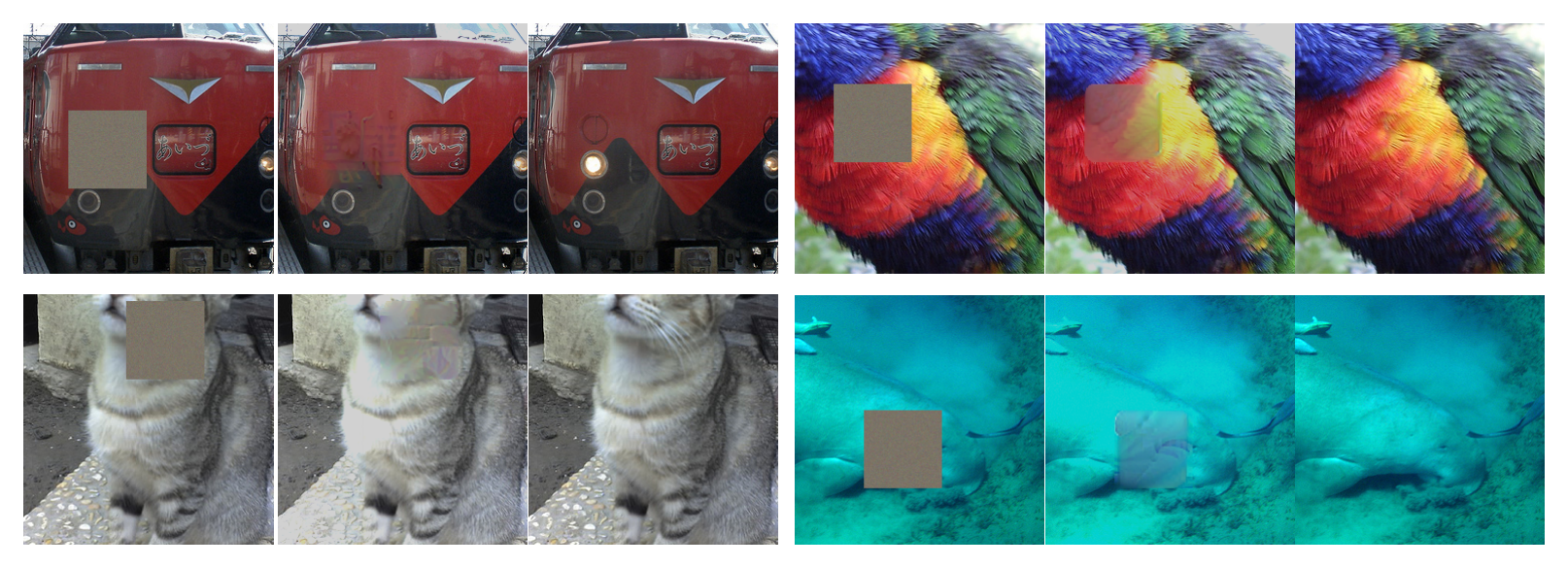
The same field supports synthesis, guidance, editing, inpainting, and explanation.
02 / Results from the paper
One field. Several ways to use it.
03 / Beyond synthesis
A calibration source when real data are unavailable
DSF-generated samples also serve as zero-shot quantization calibration data. The paper evaluates a quantized DINOv2 feature extractor with 100 calibration images per source, comparing feature preservation with real-image and data-free calibration baselines.
The claim is tied to the evaluated models and settings; the paper provides the quantitative comparisons and limitations.
In the paper
Abstract
Discriminative models are trained with task-specific objectives such as classification, detection, or representation learning, yet their practical utility depends on generalizing beyond the training task to unseen samples from the same domain. This suggests that a discriminative model may retain an implicit trace of the data manifold beyond its task labels. We ask whether this trace can be exposed as a generative signal without task-specific guidance. We introduce the Discriminative Score Function (DSF), which extracts an image-space generative field from the loss-gradient geometry of a pretrained discriminative model. DSF provides a training-free update rule that moves images toward model-consistent visual regions without retraining or task-specific targets. We apply DSF to diverse pretrained discriminative models, including ResNet classifiers, DETR detectors, and DINOv2 ViT encoders. DSF generates unconditional images from noise and supports conditional guidance, editing, inpainting, and explanation through the same field. DSF-generated samples also provide effective zero-shot quantization calibration when real images or labels are unavailable, preserving feature geometry better than data-free calibration baselines. These results show that discriminative training leaves a generative functional signal for synthesis and calibration.
Reference
Citation
@inproceedings{lee2026dsf,
  title={Discriminative Score Function: Turning Pretrained Models into Functional Generative Priors},
  author={Junhoo Lee and Hyeonjin Kim and Sangbum Han and Nojun Kwak},
  booktitle={Advances in Neural Information Processing Systems},
  year={2026},
  url={https://junhoo.me/dsf}
}